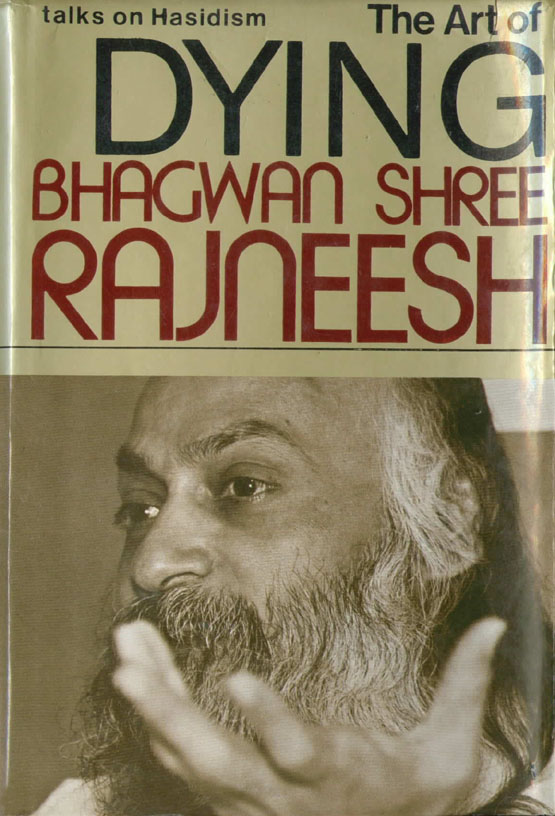
The Art of Dying
Discourses
Table of Contents
The Art of Dying
The Art of Dying. Rabbi Birnham lay dying; his wife wept. 'My whole life was only that I might learn how to die.' Life is in living—not a thing but a process. Don't seek meaning in dogma or philosophy. Life is herenow—in your breathing, your heartbeat. The art of dying: living so totally that death becomes the culmination, not the enemy.
Confusion is my Method
Confusion is my Method. 'How to prepare for death?' Don't accumulate anything—power, money, prestige, virtue, knowledge. If you don't accumulate, you're ready to die any moment. Fear of death comes from accumulations. Blessed are the poor in spirit—be in the world but not of it. Possessiveness is the problem. Confusion is my method: the master confuses you to break your mind's categories.
Walking the Tightrope
Walking the Tightrope. Rabbi Israel: 'How should we serve God?' 'How should I know?' Two friends of the king, guilty—the king gave each a rope: one to be hanged, one pardoned. They didn't know which was which. Walking the tightrope: life is a rope over the abyss—don't look down, don't look back. Balance is everything; the tightrope walker is the mystic.
Let It Be So
Let It Be So. 'Something has happened through you but it's inexpressible.' Don't convert experience into a question. Don't make a problem out of it. When it starts happening, enjoy it, dance it, sing it—don't question. The mind tends to convert every experience into a problem. Let it be so: acceptance, not analysis. The inexpressible is growing in you—give it space.
Peasant Wisdom
Peasant Wisdom. The old peasant: 'What you don't get by your own work, you don't have.' Truth cannot be borrowed—you must earn it through your own experience. No one else's realization can become yours. Peasant wisdom: the most profound truths are simple. What you don't live, you don't know. Books, scriptures, masters—all pointers. You must walk the path yourself.
Why No Women?
Why No Women? 'If Hasidism is so great, why exclude women?' Never judge the past by present standards. Buddha hesitated to initiate women—not from orthodoxy but compassion, because society wasn't ready. Hasidic dancers would have been destroyed if women joined. Why no women: the exclusion was social necessity, not spiritual principle. Now the times have changed—Osho includes women fully.
The Treasure
The Treasure. Rabbi Eisik dreamed of treasure under a bridge in Prague. The guard laughed: 'I dreamed of treasure under Eisik's stove in Cracow!' Eisik went home, dug, found the treasure. The treasure: what you seek is under your own stove. You travel the world searching for what's already within. The treasure is yourself—you must dig where you already are.
A Child on the Seashore of Time
A Child on the Seashore of Time. 'Who are you and what play are you playing?' I don't know who I am. Only the knower is left; the known has disappeared. Knowledge needs division—knower and known. When the known disappears, pure knowing remains. A child on the seashore of time: collecting shells, playing, not knowing. The master is a child who has come back—playing with eternity.
'I see what I need to see'
'I see what I need to see.' Blind Rabbi Bunam refused the miracle cure: 'I see what I need to see.' Spirituality is not morality—it's vision. A practised virtue is dead. Virtue is virtue only when spontaneous, natural, out of awareness. You can't practise non-violence and be non-violent—vision must change. When vision changes, virtue flows naturally. The blind rabbi sees more than the sighted.
Just a Hotch-potch
Just a Hotch-potch. 'Are movements like Arica, EST, TM the synthesis of East and West?' Real synthesis is the disappearance of East and West—not a hotchpotch. Mechanical unity (a clock) is put together from outside. Organic unity (a tree) grows from within. A hotchpotch is compromise, not synthesis. The transcendental: neither East nor West, but a new consciousness altogether.