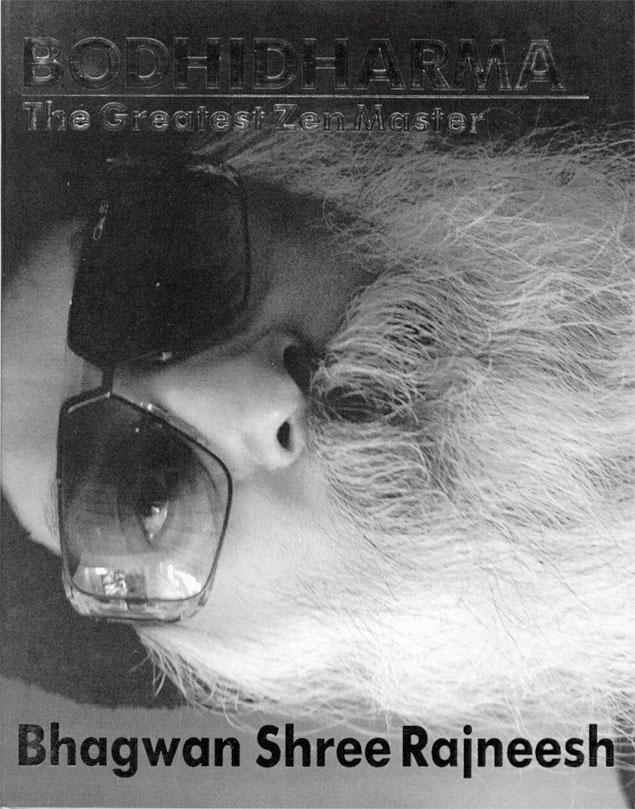
Bodhidharma: The Greatest Zen Master
Discourses
Table of Contents
To seek nothing is bliss
Osho introduces Bodhidharma—a prince turned mystic who brought Zen to China. The sutras attributed to him are disciples' notes, mixed with misunderstandings. Bodhidharma's real teaching: seek nothing, behold the mind, don't worship buddhas—your own nature is the buddha.
A pilgrimage to your own being
The English word 'mind' mistranslates the Sanskrit 'chitta'—no-mind. Bodhidharma's disciple confuses mind with no-mind throughout. Buddhas don't save buddhas; you are already a buddha. Don't worship, don't invoke—just see your nature. A buddha acts spontaneously, beyond good and evil.
Beyond this nature there's no Buddha
A teacher imparts information; a master is his own authority through experience. Only seeing your nature makes you a buddha—scholarship is useless. Everything visible is dream-stuff; only awareness of your nature survives death. One in a million awakens without a master's help.
Buddhas don't practice nonsense
No ritual—invoking, reciting sutras, making offerings—can bring enlightenment. Only seeing your nature works. A buddha is free of karma, beyond precepts, neither pure nor impure. Don't practice nonsense; don't claim enlightenment without experience. The real body is no-mind, eternal and formless.
Suchness is our self-nature
People are deluded because they don't know who they are—they create false identities. Suchness (tathata) means accepting everything as its nature. Each buddha is unique; don't expect uniformity. Don't worship appearances—your no-mind is the buddha. All forms are illusions.
Understanding comes in mid-sentence
Don't envision or worship buddhas—you degrade yourself. The way is wordless; doctrines are illusions. Understanding comes in mid-sentence—in the gaps of silence. At death, don't cling to appearances; remain pure consciousness. Freedom from attachment is freedom from death itself.
Get ready and claim your inheritance
Don't divide existence into mundane and sacred—divisions create inner conflict. A buddha finds freedom in good fortune and bad, transforming everything he touches. Act only out of totality and awareness—spontaneous, mirror-like. Nurture awareness in every act; accept what life brings.
Everybody has the right to be wrong
Bodhidharma's prejudice against arhatas is his blind spot. Ananda learned for forty-two years but wasn't enlightened until Buddha died. Sex is immaterial once you see your nature—habits can't corrupt enlightenment. Butchers can be buddhas. Act without acting: speak without speaking, walk without walking.
Dead men don't bleed
Detachment is enlightenment—it negates appearances. Greed, anger, and delusion are the three poisons creating hell; their absence is heaven. Meditation is a twenty-four-hour quality, not a separate act. The greatest charity is giving up yourself to existence without regret.
Not to be in the mind is everything
Using mind to find reality is delusion; not using mind is awareness. Freeing yourself from words is liberation. The sage's mind and reality are both still—he is always in samadhi. The world is your mind's projection; when mind doesn't stir, the world doesn't arise.
Mind is the greatest enemy of man
Mind is the greatest enemy; no-mind is your friend. When mind exists, everything is false; when it doesn't, everything is true. Reincarnation gives you enough time to grow bored with repetition and seek meditation. Awareness is buddhahood; delusion creates the longing for it.
Every suffering is a Buddha-seed
Mind never reaches nirvana—no-mind IS nirvana. Suffering is a buddha-seed: it impels the search for wisdom. Speech and silence are complementary—a tathagata's speech doesn't depend on silence nor vice versa. Those who understand both are in samadhi. Mind is bondage; no-mind is freedom.
Mind is the bondage
The buddha comes from the mind but isn't the mind—like a lotus from mud. Mortality and buddhahood are like water and ice: same nature, different temperature. Mortals liberate buddhas through affliction; buddhas liberate mortals through awareness. Beyond both shores, the tathagata is nowhere and everywhere.
To face a Buddha is dangerous
Buddhas have three bodies—transformation, reward, real—but actually have none. Student, disciple, and devotee perceive progressively deeper. Individuals create karma; karma doesn't create individuals. Don't look for sages far away—your own no-mind is the sage. Sages follow the way moment to moment.
Breakthrough... to buddhahood
Breakthrough—going beyond mind through awareness—is different from breakdown, which is insanity. Beholding the mind is the essential method including all others. Psychoanalysis fails because it analyzes leaves, not roots. Everything good has awareness as its root; from awareness grow all virtues and nirvana.
The courage to say i don't know
The ultimate question—what is the root of ignorance?—has no answer. Bodhidharma lacked the courage to say 'I don't know.' Osho declares the mystery: ignorance has no beginning, awareness has no end. Only innocence can accept this. Everything is indefinable; existence is unknowable mystery.
Take the risk wholesale
Buddha's 'three countless kalpas' of practice conflict with Bodhidharma's sudden enlightenment teaching. He compromises with Mahayana tradition rather than speaking truth. Enlightenment is always sudden; gradualness is for cowards. Take the risk wholesale, not in installments. Bodhidharma's compromise diminished his greatness.
Wakefulness is awareness
Bodhidharma's answers grow increasingly absurd—dharmamilk from a golden ox, six senses as six thieves. He cannot say Buddha is wrong, so he fabricates metaphors that explain nothing. Charity is sharing, not abandoning the visual world. Enlightenment needs no cause; it is discovery, not creation.
Relish the mystery in the depths of your heart
Bodhidharma reinterprets rituals as metaphors—monastery as pure body, incense as dharma-incense, flowers as virtue—to avoid contradicting Mahayana. These sutras were inserted for Buddhism's survival, not from Buddha. Buddha opposed statues and worship. Truth matters more than institutional survival; compromise destroys integrity.
Less than an eyeblink away
The bathhouse sutra was pragmatic—encouraging people to help monks bathe—not metaphorical. Bodhidharma's fabrications grow wilder: invisible bodies, spiritual milk. He contradicts his own earlier sutras. Finally he returns to truth: the door is hidden, realization is now, less than an eyeblink away. Behold the mind.