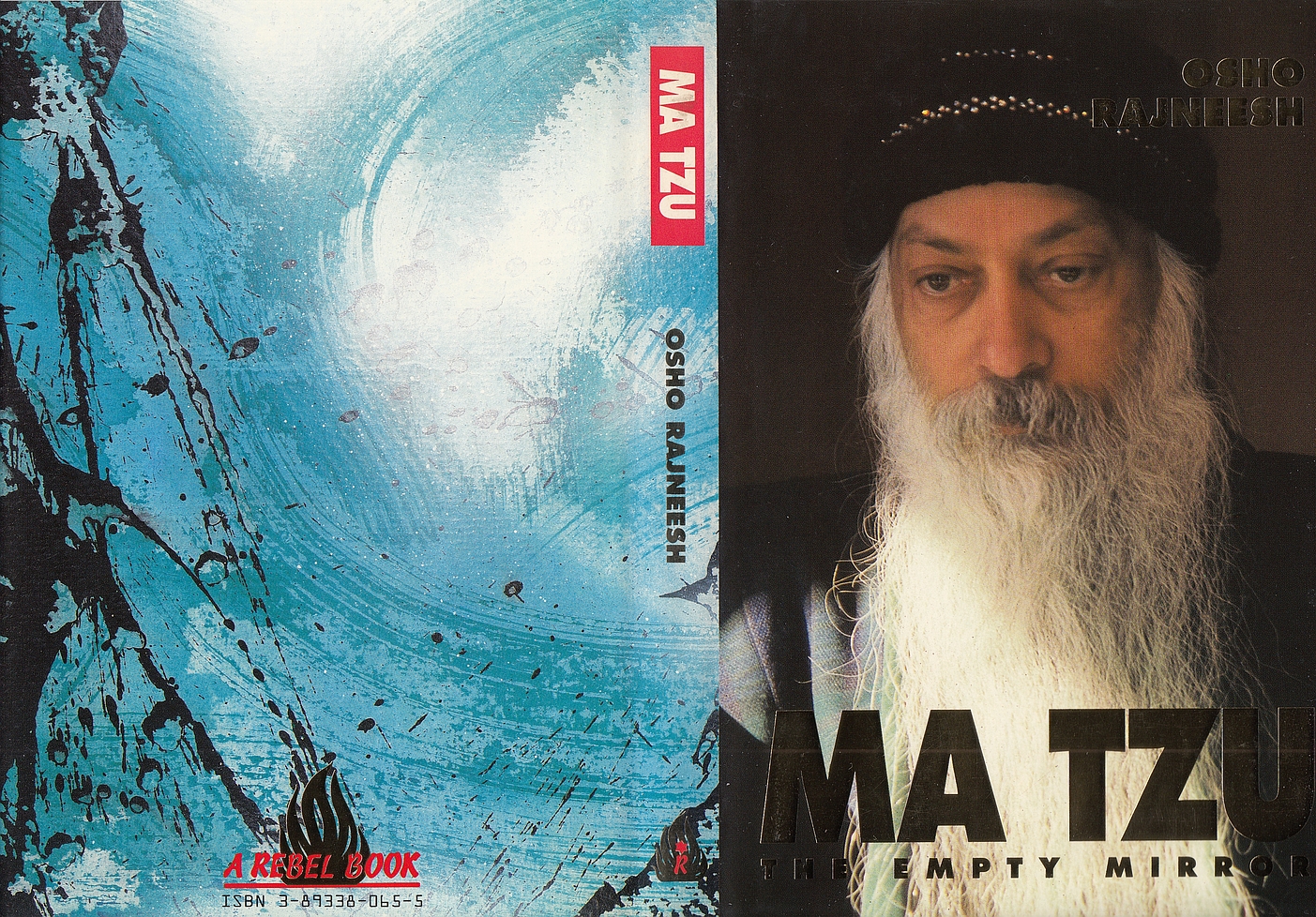
Ma Tzu: The Empty Mirror
Discourses
Table of Contents
The mirror
The mirror. Nangaku found Ma Tzu meditating: 'What do you aspire to attain?' 'Buddhahood.' Nangaku ground a brick against a rock. 'I'm making a mirror.' 'How can a brick become a mirror?' 'Then how can sitting make you a Buddha?' The ox-cart: if the cart doesn't move, whip the cart or the ox? Buddha has no fixed postures. To sit yourself into Buddha is to kill the Buddha. Zen wants you utterly simple, not special. The mind wants to be special; Zen goes against four million years of mind.
Sowing seed
Sowing seed. Ma Tzu felt he was drinking exquisite nectar. 'How to be attuned to formless samadhi?' Nangaku: 'Interior wisdom is like sowing seed; my Dharma is like heavenly showers.' 'The Tao is beyond color and form—how can it be seen?' 'The dharma-eye of your interior spirit perceives it.' The ground of no-mind contains many seeds—the flower of samadhi is beyond color and form. At this, Ma Tzu was truly enlightened, then attended his master for ten years. You are seeds—the rains are here, the clouds are in the auditorium.
Ripe plum
Ripe plum. Nangaku: 'Don't go home—an old woman will talk of your infant name.' Ma Tzu swore never to return home. Ta-mei asked 'What is Buddha?' Ma Tzu: 'The present mind.' Ta-mei was enlightened, went to the mountains. Later Ma Tzu changed his teaching to 'neither mind nor Buddha.' Ta-mei: 'That old fellow! When will he cease confusing people? I stick to: this present mind itself is Buddha.' Ma Tzu: 'The plum has ripened.' Zen uses contradictions to tire the mind into silence—that silence opens the door.
Twisted nose
Twisted nose. Wild geese flew over. Ma Tzu: 'Where are they?' Hyakujo: 'Flown away.' Ma Tzu twisted his nose—Hyakujo cried out. 'They have been here from the very beginning.' Hyakujo attained enlightenment. Next day he rolled up Ma Tzu's mat before the sermon. 'I feel no more pain today.' Ma Tzu spat: 'Mountains, rivers, the whole universe—I didn't like that.' 'The universe is splendid!' 'Disgusting to me—this is the state of a bodhisattva.' Devices to provoke awakening—not puzzles but communications of the greatest value.
Like a cow
Like a cow. Three disciples enjoying the moon. Chih-tsang: 'Good time for offerings.' Hui-hai: 'Good time to cultivate spiritual life.' Nan-chuan shook his sleeves and walked away. Ma Tzu: 'Nan-chuan alone transcends all things.' 'What is Buddha?' 'Mind is Buddha.' 'What is the Way?' 'No-mind is the Way.' 'Are they different?' 'Buddha is stretching the hand; the Way is clenching the fist.' Ma Tzu walked like a cow, looked like a tiger—only tremendous courage lets you walk on all fours, not caring about opinions.
The hunter
The hunter. Shih-kung, a hunter who loathed monks, met Ma Tzu. 'How many deer with one arrow?' 'One.' 'You don't know how to shoot—I can kill a whole flock with one arrow.' 'Why shoot a whole flock?' 'Since you know this, why don't you shoot yourself?' Shih-kung became a monk. Later in the kitchen: 'Tending an ox.' 'How?' 'As soon as it returns to the grass, I pull it back by the nostrils.' Two kinds of masters: one uses words, the other uses silence, presence, being.
To the source
To the source. Yakusan knew scriptures but longed for true freedom. Sekito: 'Neither affirmation nor negation—what can you do?' Sent him to Ma Tzu. Ma Tzu: 'Sometimes I make him raise his eyebrows; sometimes not. How do you understand this?' Yakusan was enlightened. 'Like a mosquito crawling on a bronze ox.' Three years later: 'The skin has moulted off—only one true reality remains.' Ma Tzu: 'Make yourself a raft for others—one cannot always travel without abiding.' The authentic master sends disciples to the right climate—no rivalry.
This moment
This moment. A monk drew four lines—'Besides long and short, what else?' Ma Tzu drew one line: 'This could be called either long or short.' 'What is the meaning of Bodhidharma's coming from the West?' 'At this moment, what do you mean by meaning?' He struck the monk. To another: 'Lower your voice, come nearer'—then struck him. 'Six ears don't have the same plan.' Ma Tzu sent monks to different disciples: 'I'm tired—ask Chizo.' 'Headache—ask Hyakujo.' 'I don't know.' Ma Tzu: 'Hyakujo's cap is black; Chizo's cap is white.'
No ripples
No ripples. 'Who is the man who doesn't take all dharmas as companions?' Ma Tzu: 'After you've swallowed all the water in the West River, I'll tell you.' The monk was instantly awakened. Every dharma is the dharma of the mind—the moon's shadow has many shapes, but the real moon doesn't. Cultivation is of no use for Tao—just be free of defilement. Everyday-mindedness: free from right and wrong, taking and giving. Walking, standing, sitting, lying down—all is Tao. No ripples: the witness is never the witnessed; only your being is eternal.
Moon-face
Moon-face. Ma Tzu drew a circle: 'Enter it and I'll strike you; don't enter and I'll strike you.' Impo pushed a cart over Ma Tzu's outstretched legs—'What's stretched out cannot be retracted.' Ma Tzu lifted an axe; Impo bent his neck; the axe was put down. In his last illness: 'Sun-faced Buddhas, moon-faced Buddhas.' He predicted his death, climbed Mount Sekimon, said 'Next month my carcass returns to the earth.' Bathed, sat cross-legged, passed away at eighty. Ma Tzu never lost an opportunity to make a point—even at death's door.