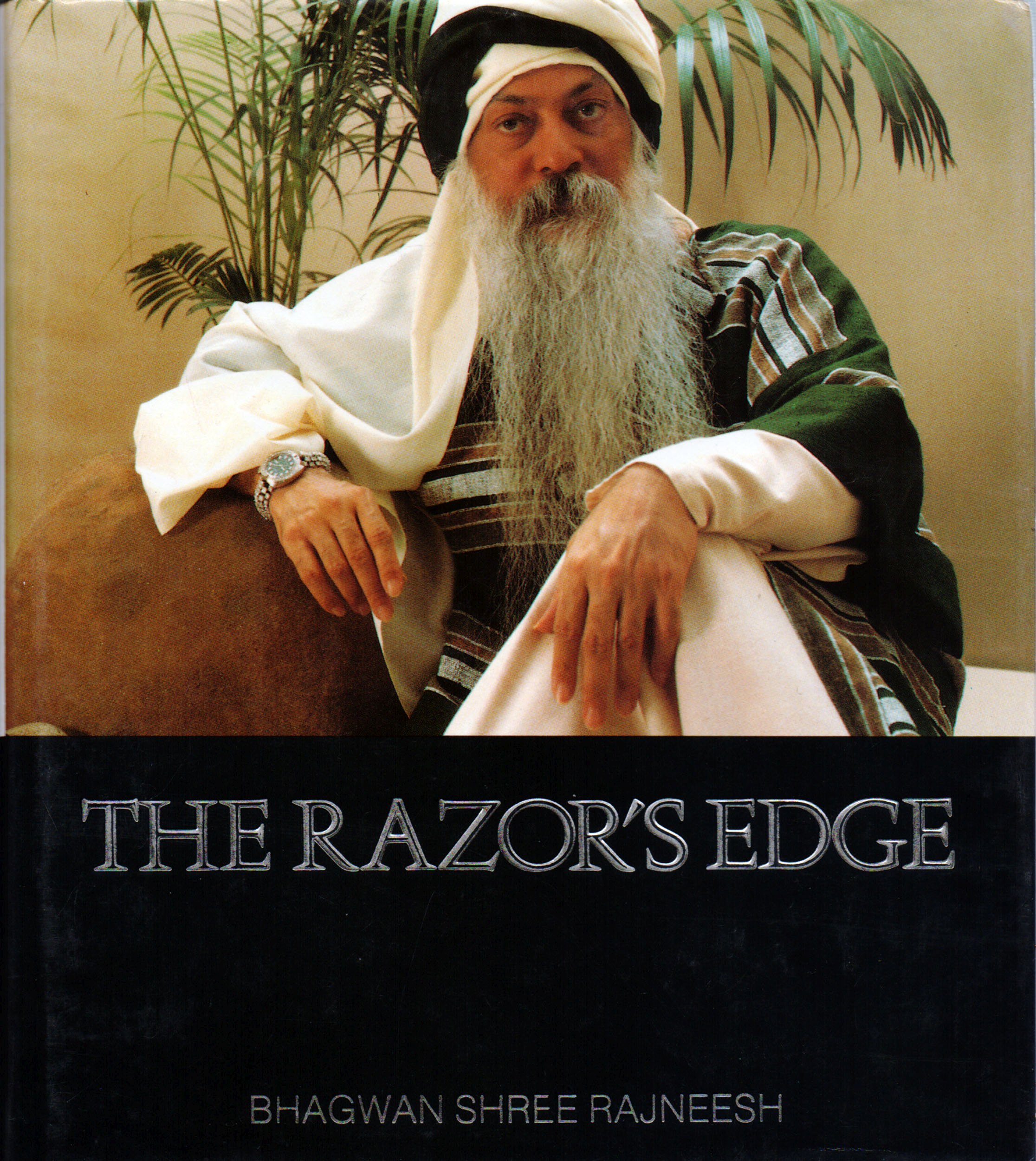
The Razor's Edge
Discourses
Table of Contents
Miracles are bound to happen
Miracles are bound to happen. On the path—miracles happen. Miracles are bound to happen: the master's assurance—on the spiritual path, miracles happen. The razor's edge: not supernatural tricks but the miracle of transformation. Walk the edge and miracles occur.
The new man: a citizen of the world
The new man: a citizen of the world. The new man is a world citizen. The new man: a citizen of the world: the master's vision—the new human is not national but global. The razor's edge: nationalism is the old; world citizenship is the new.
Just like the open sky
Just like the open sky. Freedom is like the open sky. Just like the open sky: the sage's freedom is like the open sky—boundless. The razor's edge: the sky has no walls; the sage has no boundaries. Be like the sky.
First be selfish
First be selfish. Selfish first—then selfless. First be selfish: the master's paradox—first be selfish (find yourself), then be selfless. The razor's edge: the selfishness of finding the self precedes selfless service. You can't give what you don't have.
Existence loves imperfection
Existence loves imperfection. Imperfection is loved—by existence. Existence loves imperfection: the master's reassurance—existence loves imperfection. The razor's edge: the imperfect is growing; the perfect is dead. Don't be perfect—be growing.
Laughter is the essential religion
Laughter is the essential religion. Laughter is the essential religion—not solemnity. Laughter is the essential religion: the master's heresy—laughter, not solemnity, is the core of religion. The razor's edge: the sage laughs; the priest is solemn. Laughter is sacred.
When the ocean has called you
When the ocean has called you. The ocean calls—when it does, go. When the ocean has called you: the master's metaphor—when existence calls, go. The razor's edge: the ocean calls the drop. Don't resist—merge. The calling is the awakening.
Our dance is forever
Our dance is forever. The dance is eternal—forever. Our dance is forever: the sage's dance is eternal—not temporary. The razor's edge: the dance of existence never stops. The sage joins the eternal dance. Forever.
Love is never too much
Love is never too much. Love can't be too much—always enough. Love is never too much: the master's assurance—love can't be excessive. The razor's edge: there's no such thing as too much love. Love more, not less.
With trust, it is always spring
With trust, it is always spring. Trust brings spring—always. With trust, it is always spring: the master's promise—trust makes every season spring. The razor's edge: the trusting heart lives in eternal spring. Trust and bloom.
Bring the dawn, dispel the darkness
Bring the dawn, dispel the darkness. Be the dawn—dispel the dark. Bring the dawn, dispel the darkness: the master's call—be the dawn. The razor's edge: you are the dawn; the darkness is the mind. Bring the light (awareness) and darkness vanishes.
God is also seeking you
God is also seeking you. God seeks you—not just you seeking God. God is also seeking you: the master's reversal—God seeks you too. The razor's edge: the search is mutual. You seek God; God seeks you. The meeting is inevitable.
You can't hold on and clap too
You can't hold on and clap too. You can't hold and clap—let go. You can't hold on and clap too: the master's metaphor—you can't hold on and clap. The razor's edge: to clap (celebrate), you must let go. Hold on = no clapping. Let go = celebration.
Easy is right
Easy is right. What's easy is right—not difficult. Easy is right: the master's teaching—the right path is easy, not difficult. The razor's edge: the difficult is the ego's; the easy is the soul's. If it's hard, you're forcing. Easy is right.
One coin, two sides
One coin, two sides. Two sides—one coin. One coin, two sides: the master's vision—opposites are two sides of one coin. The razor's edge: joy and sorrow, life and death—same coin. Don't choose a side—hold the coin.
Who created god
Who created god. The question—who created God? Who created god: the master's provocation—if God created everything, who created God? The razor's edge: the question dissolves the concept of a creator God. God is not created—God IS.
Playing a part in the movie
Playing a part in the movie. You're playing a part—in the cosmic movie. Playing a part in the movie: the master's metaphor—you're an actor in the cosmic movie. The razor's edge: play your part but know it's a movie. Don't take the role seriously.
The river needs no guide
The river needs no guide. The river doesn't need a guide—it flows. The river needs no guide: the master's metaphor—the river reaches the ocean without a guide. The razor's edge: existence flows naturally. Don't guide—flow. The river knows.
Awareness will not go to war
Awareness will not go to war. Awareness is peaceful—doesn't wage war. Awareness will not go to war: the master's declaration—awareness doesn't fight. The razor's edge: the aware person doesn't wage war—inner or outer. Awareness is peace itself.
Each human being is a longing of existence
Each human being is a longing of existence. Each human is existence's longing. Each human being is a longing of existence: the master's vision—each human is existence longing to know itself. The razor's edge: you are existence's longing. Not separate—the longing itself.
What am i doing here?
What am I doing here? The ultimate question—what am I doing here? What am I doing here? the master's question—the fundamental question. The razor's edge: not 'what should I do' but 'what am I doing here?' The question that awakens.
Don't be worried -- the worst will also happen
Don't be worried -- the worst will also happen. The worst will happen—don't worry. Don't be worried—the worst will also happen: the master's humor—don't worry, the worst will happen too! The razor's edge: worry doesn't prevent the worst. So why worry? Accept all.
It is a carbon copy
It is a carbon copy. Your life is a carbon copy—not original. It is a carbon copy: the master's critique—most lives are carbon copies, not originals. The razor's edge: don't live a copy. Be original. The razor's edge cuts through copies.
No heaven, no hell, no doubt
No heaven, no hell, no doubt. No heaven, no hell—no doubt. No heaven, no hell, no doubt: the master's declaration—no heaven, no hell, no doubt. The razor's edge: heaven and hell are mind-projections. Here and now is the only reality. No doubt.
The same vicious circle
The same vicious circle. The mind's vicious circle—same circle. The same vicious circle: the master sees the mind's patterns—the same vicious circle repeating. The razor's edge: the circle is the mind's; break it with awareness. Step off the wheel.
Live fearlessly, die fearlessly
Live fearlessly, die fearlessly. Both living and dying—fearlessly. Live fearlessly, die fearlessly: the master's call—live and die without fear. The razor's edge: fearlessness is the sage's hallmark. Not reckless but aware. No fear in living, no fear in dying.
This i call the razor's edge
This I call the razor's edge. The razor's edge defined—this is it. This I call the razor's edge: the master names it—the razor's edge is the path between mind and no-mind. The razor's edge: the narrow path, the precise cut. Walk it with awareness.
Truth: the greatest surgery
Truth: the greatest surgery. Truth is surgery—the greatest. Truth: the greatest surgery: the master's metaphor—truth is surgery on the ego. The razor's edge: the truth cuts—the ego is the tumor. The surgery is painful but healing. Let truth operate.
The answer is you
The answer is you. The answer is not out there—it's you. The answer is you: the master's ultimate revelation—the answer is you. The razor's edge: don't seek the answer outside. You are the answer. Stop seeking—be.
A little more courage, a little more love
A little more courage, a little more love. The final message—courage and love. A little more courage, a little more love: the master's final request—just a little more courage, a little more love. The razor's edge: courage to walk the edge, love to make it beautiful.