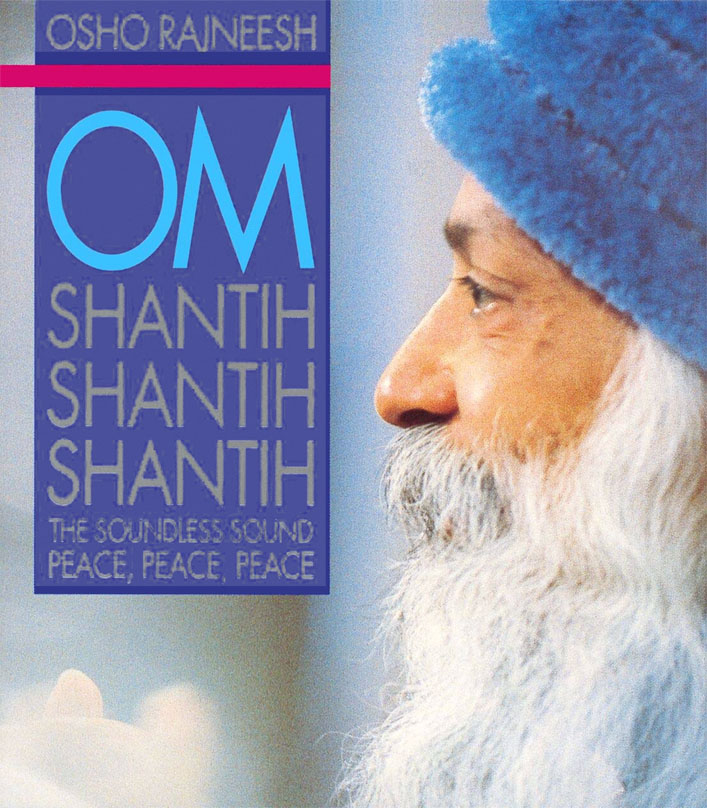
Om Shantih Shantih Shantih
Discourses
Table of Contents
Sound is our mind -- silence is our being
Sound is our mind -- silence is our being. Sound is mind; silence is being. Om Shantih: sound (thought) is the mind's language; silence is the being's language. Shantih means peace—the peace of silence. The triple Shantih: peace in body, peace in mind, peace in being.
An open future with no reverse gear
An open future with no reverse gear. The spiritual path has no reverse—only forward. An open future with no reverse gear: the path moves in one direction—forward. No reverse. Once you start, you can't go back. The sage doesn't look back—the past is gone. Shantih: the future is open and irreversible.
Love is showering on your boyfriend too!
Love is showering on your boyfriend too! Love falls on everyone—like rain. Love is showering on your boyfriend too! love is not exclusive—it showers on everyone, like rain. The sage's love is universal. Shantih: don't hoard love—it's not a commodity. Let it shower on all.
Life itself prepares the ground
Life itself prepares the ground. Life prepares you—not you. Life itself prepares the ground: you don't prepare for awakening—life does. Your experiences, your suffering, your joy—they prepare the ground. Shantih: trust life's preparation. The seed sprouts when the ground is ready.
Love gives your legs a dance
Love gives your legs a dance. Love makes you dance—not walk. Love gives your legs a dance: love doesn't just move you—it makes you dance. Walking is mechanical; dancing is alive. Shantih: love transforms all movement into dance. The sage dances through life.
First find yourself
First find yourself. Before love, before service—find yourself. First find yourself: don't try to love or serve before you've found yourself. An empty self can't give. Shantih: first be—then give. Finding yourself is the prerequisite for everything.
Nothing unnatural, but something unique
Nothing unnatural, but something unique. Not unnatural—unique. Nothing unnatural, but something unique: the sage is not unnatural—he's unique. Beyond nature (animal) and supernature (angel)—the unique human. Shantih: don't be natural (instinctive) or supernatural—be uniquely yourself.
Forward to supernature
Forward to supernature. Beyond nature—supernature. Forward to supernature: the path leads beyond nature—into supernature. Not against nature but beyond it. Shantih: evolution from animal to human to superhuman. Supernature is the next step.
Old stones that you used to think were diamonds
Old stones that you used to think were diamonds. What you valued was just stones. Old stones that you used to think were diamonds: the sage looks back at what he valued—old stones, not diamonds. The mind's treasures are pebbles. Shantih: seeing through false values is the beginning of wisdom.
Only reflecting, but not identifying
Only reflecting, but not identifying. Reflect but don't identify—be the mirror. Only reflecting, but not identifying: the sage reflects everything but identifies with nothing. Like a mirror—reflects but doesn't cling. Shantih: be the mirror. Reflect the world, don't become it.
Just don't be a polack!
Just don't be a polack! Don't be stupid—the 'polack' joke. Just don't be a polack! Osho uses the polack joke as a metaphor for stupidity—not Polish people but anyone asleep. Shantih: don't be a polack (asleep)—be awake. The joke is on the mind, not on a nation.
Camels don't like to go to the mountains
Camels don't like to go to the mountains. The camel (burden-bearer) avoids the heights. Camels don't like to go to the mountains: the camel (one who carries burdens) avoids the mountain (spiritual heights). The camel is the worldly person—loaded, low. Shantih: drop the burdens—climb the mountain. Become the lion, not the camel.
Be, known thyself, keep the measure
Be, known thyself, keep the measure. Three injunctions—be, know, measure. Be, known thyself, keep the measure: three commands from the Delphic oracle. Be (existence), know thyself (awareness), keep the measure (balance). Shantih: these three contain all wisdom.
Trust life, love life.
Trust life, love life. Trust and love life—both needed. Trust life, love life: the sage trusts life (surrender) and loves life (celebration). Trust without love is dry; love without trust is anxious. Shantih: trust and love together—life responds to both.
The three rings of love
The three rings of love. Three circles of love—expanding. The three rings of love: love expands in rings—personal, communal, universal. First ring: love the near. Second: love the community. Third: love all. Shantih: love's rings expand until they include existence.
Having a lovely time -- but why?
Having a lovely time -- but why? Enjoyment is good—but why? Having a lovely time—but why? the question behind enjoyment—why are you happy? If the 'why' is external, it's fragile. If internal, it's stable. Shantih: be happy for no reason—causeless joy is the highest.
Almost drunk with emotion
Almost drunk with emotion. Emotion can intoxicate—beware. Almost drunk with emotion: emotions can intoxicate like wine—but emotional drunkenness is not spiritual. Shantih: the sage is drunk with awareness, not emotion. Emotion is of the mind; awareness is of the being.
The mind goes out of employment
The mind goes out of employment. When awareness comes—mind is unemployed. The mind goes out of employment: when awareness arrives, the mind has nothing to do. It's retired—not fired. Shantih: the mind as servant, not master. When the master (awareness) comes, the servant (mind) rests.
You cannot avoid what you are
You cannot avoid what you are. You can't avoid your true nature. You cannot avoid what you are: you can avoid everything except yourself. The self follows you everywhere. Shantih: stop running—turn around and face what you are. It's not scary—it's your liberation.
Without icecream no love is complete
Without icecream no love is complete. The earthly and the divine—both needed. Without icecream no love is complete: the Zorba and the Buddha—earthly enjoyment (icecream) and spiritual love. Both needed. Shantih: don't renounce the icecream—the lotus blooms in the mud, not above it.
Little Ernie is your brother
Little Ernie is your brother. Everyone is family—Ernie too. Little Ernie is your brother: the sage sees all beings as family. Not by blood but by consciousness. Shantih: the universe is one family (Vasudhaiva Kutumbakam). Ernie, the stranger, the animal—all brothers.
The seeker was the search
The seeker was the search. The seeker and the sought are one. The seeker was the search: the seeker IS the search—the one who looks is what's looked for. Shantih: when the seeker dissolves, the search dissolves—and truth remains. The seeker was always the sought.
When you meet me just say good-bye
When you meet me just say good-bye. The master's paradox—meeting is farewell. When you meet me just say good-bye: the master says—when you truly meet me, say goodbye. Meeting the master means dying to the old self. Shantih: the true meeting is a farewell to the ego.
A great waiting... a great longing for the unknown
A great waiting... a great longing for the unknown. The sage waits—for the unknown. A great waiting, a great longing for the unknown: the sage's state is waiting—not for something known but for the unknown. Shantih: the longing itself is the path. Don't wait for an object—wait in the longing.
Greed knows no limit
Greed knows no limit. Greed is endless—no satisfaction. Greed knows no limit: greed can never be satisfied—it always wants more. The sage steps off the wheel of greed. Shantih: contentment is not getting enough but wanting less. Greed has no limit; contentment needs none.
Existence does not believe in speed
Existence does not believe in speed. Existence is slow—don't rush. Existence does not believe in speed: existence is patient—trees grow slowly, seasons change gradually. The mind hurries; existence doesn't. Shantih: slow down to existence's pace. Speed is of the ego; patience is of the soul.
Time for silence and time for laughter
Time for silence and time for laughter. Both silence and laughter—the sage's two modes. Time for silence and time for laughter: the sage has two modes—silence (depth) and laughter (play). Both are sacred. Shantih: don't be only silent (grave) or only laughing (frivolous). Both in their time—this is Shantih.