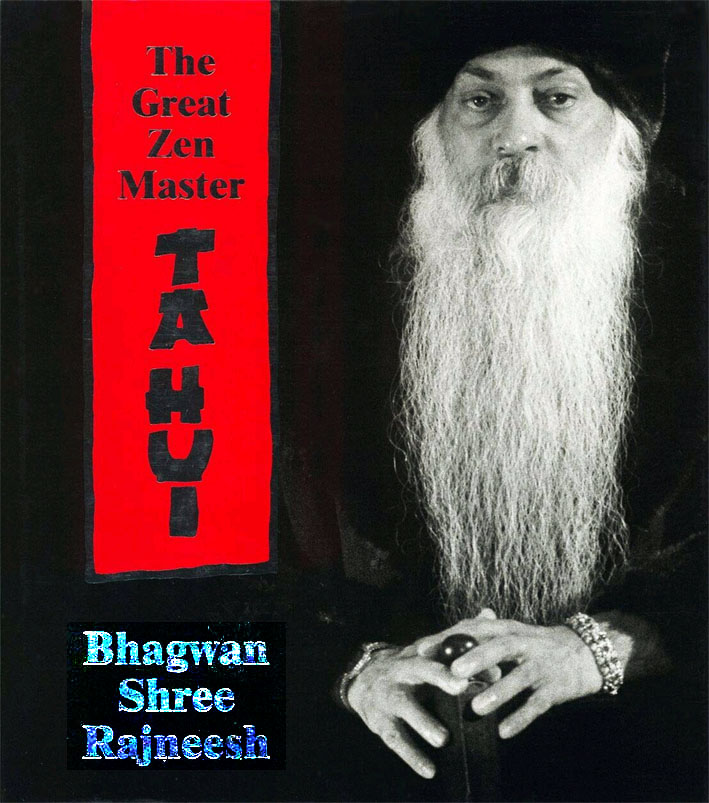
The Great Zen Master Ta Hui
Discourses
Table of Contents
Prologue. Introduction to Ta Hui—the great Zen master. Prologue: the introduction to Ta Hui, the great Chinese Zen master of the Sung dynasty. His teachings on sudden enlightenment. The great Zen master: Ta Hui's direct, uncompromising approach to awakening.
Clear the mind
Clear the mind. The mind must be cleared—of all content. Clear the mind: Ta Hui teaches—clear the mind of all thoughts, concepts, beliefs. The great Zen master: the clear mind is the mirror mind—reflecting all, holding nothing. Clear it through awareness.
Insight
Insight. Insight—not knowledge—is the door. Insight: Ta Hui teaches—insight, not intellectual knowledge, opens the door. The great Zen master: insight is sudden seeing—beyond logic. The direct perception of truth. Not thinking but seeing.
Power
Power. The power of awareness—not of the ego. Power: Ta Hui speaks on power—the power of awareness, not the ego's power. The great Zen master: awareness is the real power; the ego's power is weakness. The sage is powerful because he's empty.
Trust
Trust. Trust in the path—not belief. Trust: Ta Hui teaches trust—not belief in doctrines but trust in the path. The great Zen master: trust is existential; belief is intellectual. Trust the master, trust the path, trust yourself.
Non-attainment
Non-attainment. The ultimate is non-attainment—nothing to achieve. Non-attainment: Ta Hui's paradox—the ultimate is non-attainment. The great Zen master: enlightenment is not attained—it's recognized. You already have it. Non-attainment is the highest attainment.
Innocence
Innocence. The sage's innocence—beyond knowledge. Innocence: Ta Hui teaches—the sage returns to innocence. The great Zen master: not the child's ignorance but the sage's wisdom-innocence. Beyond knowledge, beyond cunning—pure, simple.
The source
The source. Return to the source—your original nature. The source: Ta Hui teaches—return to the source. The great Zen master: the source is your original nature—before conditioning. Go back to before you were told who you are. The source is pure being.
Delusion
Delusion. Delusion is the mind's normal state—see through it. Delusion: Ta Hui teaches—delusion is the mind's normal state. The great Zen master: we live in delusion—taking the mind's projections for reality. See through delusion through awareness.
Illusion
Illusion. The world is an illusion—not permanent. Illusion: Ta Hui teaches—the world is an illusion. The great Zen master: not that the world doesn't exist—it's not permanent. The illusion is taking the impermanent for the permanent. See through it.
Clinging
Clinging. Clinging is suffering—let go. Clinging: Ta Hui teaches—clinging is the root of suffering. The great Zen master: we cling to people, things, ideas. Clinging creates bondage. Let go—be free. The non-clinger is the free one.
Emptying
Emptying. Empty the mind—of all content. Emptying: Ta Hui teaches—empty the mind. The great Zen master: empty of thoughts, empty of desires, empty of concepts. The empty mind is the Buddha mind. Emptying is the path to fullness.
Non-duality
Non-duality. Beyond two—non-duality. Non-duality: Ta Hui teaches—beyond the dual (good/bad, right/wrong) is the non-dual. The great Zen master: duality is the mind's creation. The sage sees the one in the two. Non-duality is the ultimate vision.
Nothingness
Nothingness. The ultimate is nothingness—not something. Nothingness: Ta Hui teaches—the ultimate is nothingness. The great Zen master: not empty nothing but full nothing—the void that contains all. Nothingness is the ground of being.
Clarity
Clarity. The clear mind—sees everything. Clarity: Ta Hui teaches—the clear mind sees everything. The great Zen master: clarity is not concentration but relaxation. The clear mind is like clear water—everything is visible. Be clear.
Suchness
Suchness. Suchness—things as they are. Suchness: Ta Hui teaches—suchness (Tathata), things as they are. The great Zen master: don't judge, don't interpret—see things as they are. Suchness is the ultimate acceptance. This is it.
Before seeking
Before seeking. Before seeking—what were you? Before seeking: Ta Hui asks—before you started seeking, what were you? The great Zen master: before the search, you were the truth. The search created the distance. Stop seeking—return to before.
No goal
No goal. The path has no goal—the goal is the path. No goal: Ta Hui teaches—no goal. The great Zen master: the goal-oriented mind misses the present. No goal means each step is complete. Walk without destination—each step is the arrival.
No guilt
No guilt. Guilt is a mind creation—drop it. No guilt: Ta Hui teaches—guilt is the mind's creation. The great Zen master: guilt is the ego's self-punishment. The sage has no guilt—he's beyond sin and virtue. Drop guilt—be free.
Radiance
Radiance. The sage radiates—like the sun. Radiance: Ta Hui teaches—the sage radiates. The great Zen master: like the sun, the sage doesn't try to shine—he just does. Radiance is the natural expression of awareness. The sage glows.
Affliction
Affliction. Affliction is the mind's disease—awareness cures. Affliction: Ta Hui teaches—affliction (klesha) is the mind's disease. The great Zen master: desire, anger, ignorance—the three afflictions. Awareness is the cure. Watch the affliction—it dissolves.
Understanding
Understanding. Understanding—not knowledge—transforms. Understanding: Ta Hui teaches—understanding, not knowledge, transforms. The great Zen master: knowledge is about; understanding is of. Understanding changes you; knowledge doesn't. Understand.
Witnessing
Witnessing. The ultimate technique—witnessing. Witnessing: Ta Hui teaches—witnessing is the ultimate. The great Zen master: watch the body, watch the mind, watch the feelings. The witness is beyond all. Be the witness—pure seeing.
So very close
So very close. Enlightenment is so very close—yet seems far. So very close: Ta Hui teaches—enlightenment is so very close. The great Zen master: it seems far because the mind projects it far. It's the nearest—closer than your breath. So very close.
The inescapable
The inescapable. Death is inescapable—awaken before it. The inescapable: Ta Hui teaches—death is inescapable. The great Zen master: don't avoid the thought of death—use it. Death is certain; timing is not. Awaken now—before death finds you asleep.
Two awakenings
Two awakenings. Two types of awakening—gradual and sudden. Two awakenings: Ta Hui teaches—there are two awakenings. The great Zen master: the gradual (preparation) and the sudden (explosion). Both are part of the path. Gradual preparation; sudden awakening.
Wordlessness
Wordlessness. Beyond words—wordlessness. Wordlessness: Ta Hui teaches—beyond words is wordlessness. The great Zen master: words can point but can't contain. The truth is wordless. Don't get stuck in words—go to the wordless.
Just being
Just being. Not doing—just being. Just being: Ta Hui teaches—just being, not doing. The great Zen master: the mind is obsessed with doing. The sage is obsessed with being. Just be—nothing to do, nowhere to go. Being is the ultimate.
Mindlessness
Mindlessness. Beyond mind—mindlessness. Mindlessness: Ta Hui teaches—beyond mind is mindlessness (wu-nien). The great Zen master: not no-mind as blankness but awareness without the mind's content. Mindlessness is pure consciousness. Be mindless.
Faith
Faith. Faith—not belief—in the path. Faith: Ta Hui teaches faith—not belief but trust. The great Zen master: faith is the heart's trust; belief is the mind's acceptance. Have faith in the path, the master, yourself. Faith opens the door.
Be thorough going
Be thorough going. Don't be partial—be thorough. Be thorough going: Ta Hui teaches—don't be half-hearted. The great Zen master: be thorough in your meditation, your awareness, your commitment. Thorough means total. Total is the only way.
Release
Release. Release everything—let go. Release: Ta Hui teaches—release everything. The great Zen master: release the past, the future, the ego, the desires. Release all. The released one is the free one. Let go of everything.
Desirelessness
Desirelessness. The state of no desire—desirelessness. Desirelessness: Ta Hui teaches—desirelessness is the state of freedom. The great Zen master: not suppressing desire but seeing through it. When desire is seen as suffering, it drops. Desirelessness is peace.
Serenity
Serenity. The sage's state—serenity. Serenity: Ta Hui teaches—serenity is the sage's state. The great Zen master: not excitement, not depression—serenity. The serene mind is like a still lake. Serenity is the natural state of awareness.
Enlightenment
Enlightenment. The ultimate—enlightenment. Enlightenment: Ta Hui teaches—enlightenment is the ultimate. The great Zen master: not an achievement but a recognition. The dropping of the ego. The cloud lifts—the sun was always there. Enlightenment.
Discontinuity
Discontinuity. Enlightenment is a discontinuity—not a continuation. Discontinuity: Ta Hui teaches—enlightenment is a discontinuity. The great Zen master: not the next step but a break. The old self ends; the new begins. Discontinuity—not evolution but revolution.
Compassion
Compassion. The sage's compassion—natural, not cultivated. Compassion: Ta Hui teaches—compassion is the sage's natural state. The great Zen master: not cultivated but spontaneous. The enlightened one radiates compassion without effort. Compassion is enlightenment's fragrance.
This moment
This moment. Only this moment exists—live it. This moment: Ta Hui teaches—only this moment exists. The great Zen master: past is memory, future is imagination—this moment is the only reality. Live in this moment—totally. This moment is eternity.
Transformation
Transformation. The ultimate—transformation. Transformation: Ta Hui's final teaching—transformation. The great Zen master: not change (surface) but transformation (depth). The caterpillar becomes the butterfly. The human becomes the divine. Transformation.