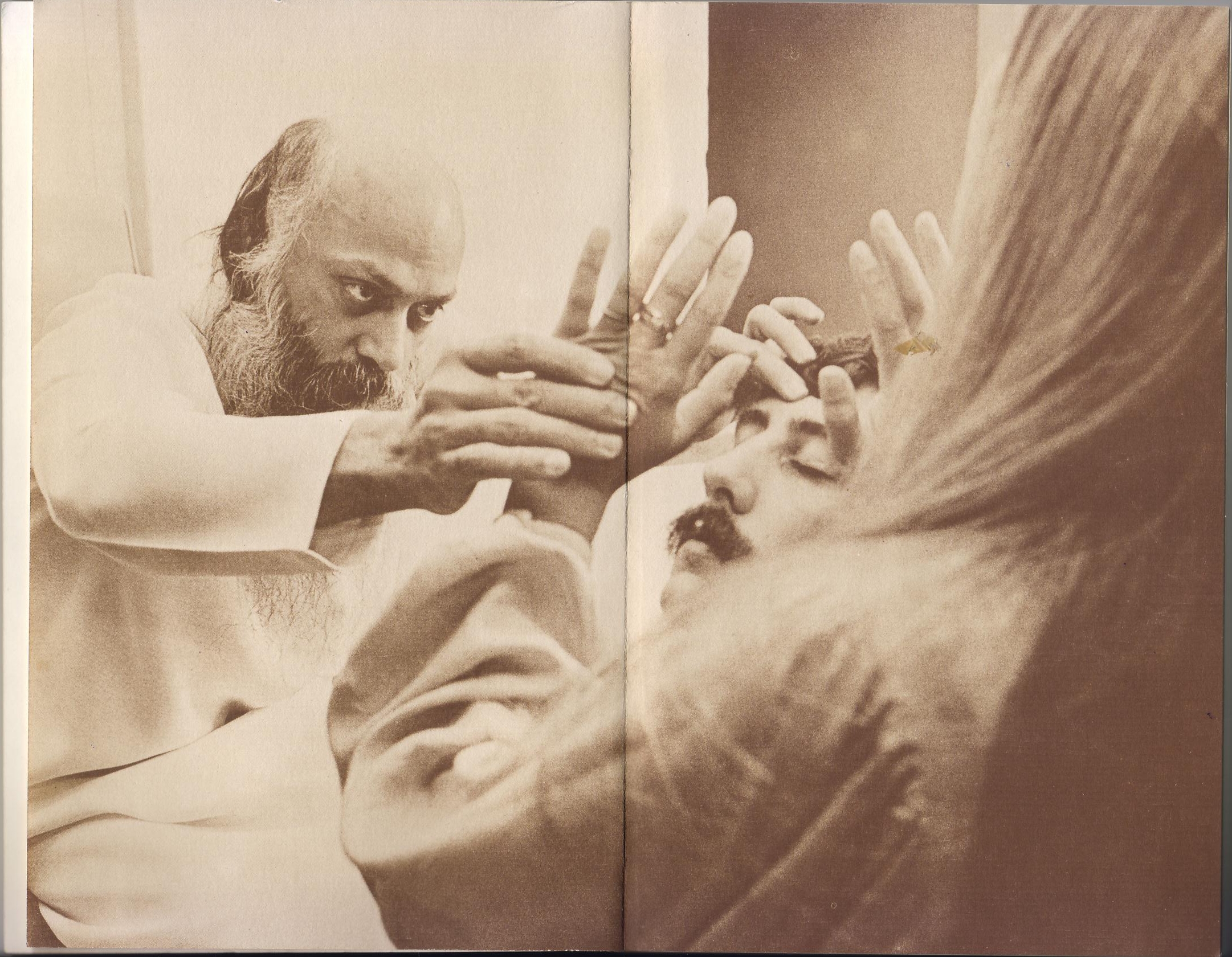
Tao: The Pathless Path, Vol 1
Discourses
Table of Contents
Voluntary death
Voluntary death. Lieh Tzu saw a skull: 'Only he and I know you were never born and will never die.' Voluntary death: the sage dies voluntarily—not the body but the ego. Before you can live, you must die to the false. The skull teaches: death is not the end but the beginning of understanding.
Sublime laziness
Sublime laziness. The Taoist's laziness is the highest activity. Sublime laziness: not laziness but effortlessness. The sage does by not-doing. The mind calls it lazy; the Tao calls it supreme. Like the river that doesn't try to flow—it just flows.
Joy has no cause
Joy has no cause. The sage's joy is causeless—depends on nothing. Joy has no cause: caused joy is fragile—when the cause goes, joy goes. Causeless joy is eternal. The Tao doesn't give reasons for joy—joy IS the reason. The sage is joyful because joy is his nature.
No bargain with reality
No bargain with reality. Don't negotiate with what is—accept it. No bargain with reality: the ego bargains—'I'll accept this if you give me that.' The Tao doesn't bargain—it accepts. Reality is not a negotiation—it's a given. Take it or miss it—there's no bargaining.
There can be no regret
There can be no regret. The sage has no regrets—what is, is. There can be no regret: regret means wanting to change the past. The past can't be changed. The sage lives in the present—no past to regret, no future to fear. The Tao: no regret because no clinging.
I am a cross to you
I am a cross to you. The master is a cross—the disciple must be crucified (ego). I am a cross to you: the master is not comfort—he's a cross. The ego must be crucified on the master. The disciple who wants comfort finds a guru, not a master. The master is your death and your rebirth.
Choose the new
Choose the new. Each moment, choose the new—don't repeat. Choose the new: the mind repeats—the sage chooses the new. Each moment is fresh—don't carry yesterday into today. The Tao is always new. Choose the new and you flow with the Tao.
Putting shoes on a snake
Putting shoes on a snake. The mind's solutions are like shoes on a snake—unnecessary. Putting shoes on a snake: the mind tries to improve what's already perfect. The snake doesn't need shoes; the soul doesn't need mind's improvements. The Tao is already right—don't fix it.
Only forgotten
Only forgotten. When you forget yourself, you're found. Only forgotten: the self must be forgotten—not by effort but by being so total in the present that the self disappears. The sage doesn't remember himself—he's forgotten. In forgetting, the Tao remembers you.
You are blessed
You are blessed. Not because of what you have but because of what you are. You are blessed: existence has already blessed you—you're alive, conscious, here. The mind doesn't see blessings—it sees problems. The Tao: you are blessed. Just recognize it.
Reality... That which works
Reality... That which works. Reality is what works—not what you think. Reality: that which works: the Taoist is pragmatic—not theoretical. If it works, it's real. If it doesn't, it's philosophy. The test of truth is not logic but life. Does your philosophy make you more alive?
This is not Kaaba
This is not Kaaba. Don't worship places—worship the living presence. This is not Kaaba: the holy place is not the stone—it's the consciousness. Don't pilgrimage to shrines—pilgrimage within. The Kaaba is everywhere for the one who sees.
Inner integrity
Inner integrity. Integrity is not moral—it's existential. Inner integrity: not honesty as policy but wholeness as being. The sage is integrated—body, mind, soul in harmony. No split, no conflict. Integrity means you're one, not many.
Just give way
Just give way. Don't resist—give way. Just give way: the Tao is the art of giving way. Like water—it doesn't resist the rock, it flows around it. The sage gives way to everything—and thus goes through everything. Yield and you win; resist and you break.