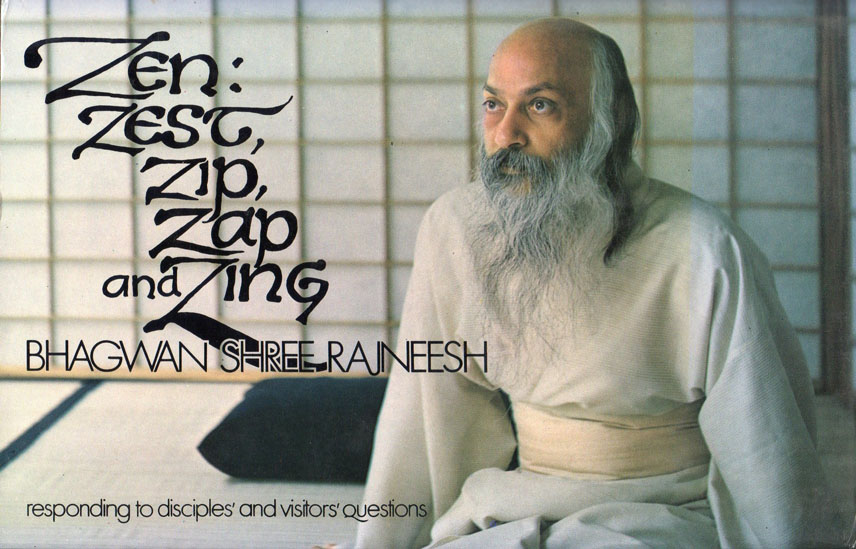
Zen: Zest, Zip, Zap and Zing
Discourses
Table of Contents
Zen: The Koan of Life
Zen: The Koan of Life. Life itself is the ultimate koan—unsolvable, livable. Zen: the koan of life: life is not a problem to solve but a koan to live. The koan can't be solved by the mind—it dissolves the mind. Zest: the koan of life is zestful, not burdensome. Live the koan—don't solve it.
Innocence: Lost and Found Again
Innocence: Lost and Found Again. The journey from childhood innocence to sage innocence. Innocence: lost and found again: the child's innocence is lost through knowledge. The sage's innocence is found through going beyond knowledge. Not regression but transcendence. The Z's: Zen's zest is innocence regained.
Sex, Love and Compassion: Seed, Flower and Fragrance
Sex, Love and Compassion: Seed, Flower and Fragrance. Three stages of the same energy. Sex, love and compassion: sex is the seed (biological), love is the flower (psychological), compassion is the fragrance (spiritual). Transform, don't suppress. Zip: the energy zips upward through these stages.
Mind: An Expert Coward
Mind: An Expert Coward. The mind is a coward—it never takes the jump. Mind: an expert coward: the mind is brilliant at rationalizing fear. It's an expert—at avoiding the unknown. Zap: Zen zaps the mind—not by fighting but by seeing through it. The coward evaporates in awareness.
Freedom and Love: The Centre and the Circumference
Freedom and Love: The Centre and the Circumference. Freedom is the center; love is the circumference. Freedom and love: the centre and the circumference: freedom is the inner core; love is the outer expression. They can't exist without each other. The sage is free (center) and loving (circumference). Zing: freedom and love together create the zing of life.
Bhagwan: Perfectly at Ease, Totally at Home
Bhagwan: Perfectly at Ease, Totally at Home. The enlightened one is at ease everywhere. Bhagwan: perfectly at ease, totally at home: the sage is at home everywhere because home is within. Not seeking comfort—being comfort. Ease is not laziness—it's the absence of inner conflict. Zzzzz—the sound of total ease.
The True Master: The Ultimate Rebel
The True Master: The Ultimate Rebel. The master is not a conformist—he's a rebel. The true master: the ultimate rebel: the master rebels against all that is false—tradition, religion, society. Not political rebellion but spiritual. The rebel says yes to truth and no to all lies. Zest: rebellion is the zest of the spiritual path.
Women: Free of All the Chains
Women: Free of All the Chains. Women must be free—spiritually, socially, psychologically. Women: free of all the chains: Osho on women's liberation—not just social but spiritual. The chains are not only external but internal—conditioning. Zen: the woman who is free is the most spiritual being. Zing: women bring zing to the spiritual path.
India: A New Present for a New Future
India: A New Present for a New Future. India needs not its past but a new present. India: a new present for a new future: India's past is dead—its temples, its rituals. India needs a new present—meditation, awareness, freedom from caste and religion. Zap: Osho zaps India's dead traditions.
Here and Now: The Only Time, The Only Place
Here and Now: The Only Time, The Only Place. The present is the only reality. Here and now: the only time, the only place: not the past, not the future—HERE and NOW. The mind lives in past and future; Zen lives in here and now. This is the ultimate Z—Zen's zip, zap, zing—all in the present.
Man: The Call of the Eternal
Man: The Call of the Eternal. Man is called by the eternal—not the temporal. Man: the call of the eternal: man is the only being who hears the call of the eternal. Animals live in the temporal; man is pulled by the eternal. Zest: the call of the eternal is the zest of human life.
Life: Let it have it's Dance
Life: Let it have its Dance. Life wants to dance—let it. Life: let it have its dance: don't control life—let it dance. The mind manages; Zen dances. Zing: the zing of life is in its dance, not in its management. Let life have its dance—just watch.
Godliness: An Experience of Immense Joy
Godliness: An Experience of Immense Joy. God is not a person but an experience—of joy. Godliness: an experience of immense joy: not God as a person but godliness as a quality. The experience is not solemn—it's immensely joyful. Zest: godliness is the zest of existence.
The Child: Father to the Man
The Child: Father to the Man. The child is the father of the man—the sage becomes a child again. The child: father to the man: Wordsworth's insight—the child's innocence is the seed of the sage's wisdom. The sage is the child matured—not the child lost. Zen: the Z's culminate in the child.
The Philousia
The Philousia. The ultimate state—beyond enlightenment. The philousia: not a word in any dictionary—Osho coins it. Beyond philosophy, beyond theologia—philousia: the love of being. The final Z: zest, zip, zap, zing—all converge in philousia—the love of simply being. The ultimate: not knowing God but loving being.